AI-Generated Videos Monetization Rules: How to Use AI on YouTube in 2026 Without Getting Demonetized
By Schedra Team
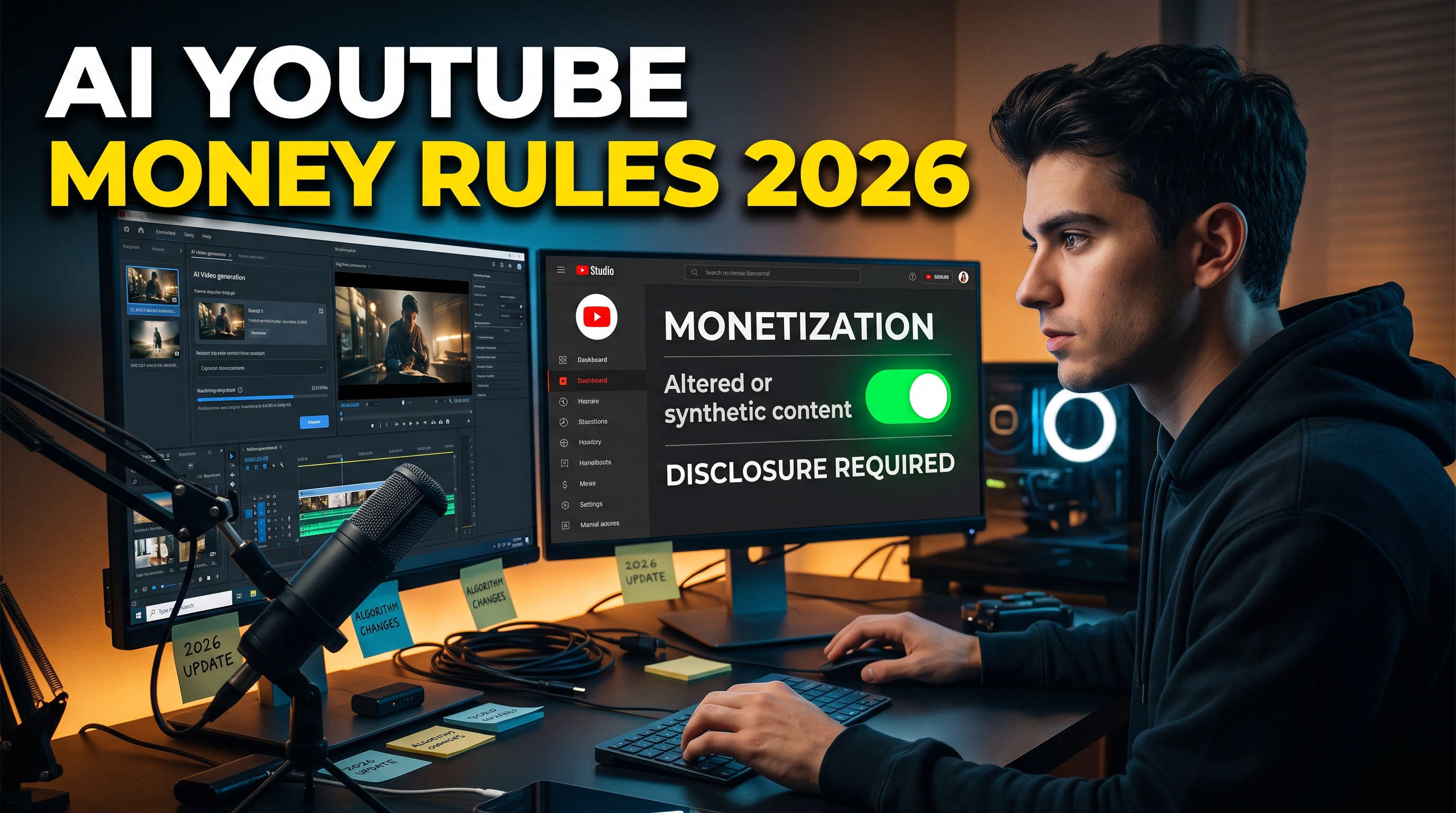
TL;DR: YouTube monetizes AI-generated videos in 2026 as long as creators disclose synthetic content via the 'altered or synthetic content' toggle in YouTube Studio and demonstrate genuine original value. Channels that skip disclosure or produce mass-generated, low-effort content face a three-strike system ending in permanent removal from the YouTube Partner Program (YPP).
What Are YouTube's AI Monetization Rules in 2026?
YouTube's updated policy, rolled out in January 2026, makes AI-generated content monetizable — but only under specific conditions. The platform draws a sharp line between using AI as a creative tool (allowed) versus using it as a creativity replacement (banned).
According to YouTube's 2026 AI content policy, every video containing synthetically generated or significantly altered media must have the 'altered or synthetic content' label toggled on inside YouTube Studio before publishing. This applies to AI-generated visuals, voice-overs, music, and even AI-written scripts read verbatim on camera.
- Allowed: AI visuals paired with original human commentary, AI-assisted educational content, reaction videos with meaningful insight, AI-produced music with creative direction.
- Banned: Mass-produced template slideshows, verbatim AI readings of Wikipedia or news articles, repetitive faceless videos with no human perspective.
The core principle: YouTube requires original value to exist, regardless of how the content was produced.
What Happens If You Don't Disclose AI Content?
Failing to disclose AI-generated content triggers a three-strike enforcement system with escalating consequences.
The penalty structure, as outlined in YouTube's 2026 disclosure requirements, works as follows:
- Strike 1: A formal warning with no immediate monetization impact.
- Strike 2: A 90-day monetization suspension — three months of zero ad revenue.
- Strike 3: Permanent removal from the YouTube Partner Program.
What makes this especially risky in 2026 is Google's deployment of SynthID, its invisible AI watermarking system. According to analysis of YouTube's 2026 algorithm update, wave demonetizations are actively being used to validate SynthID's detection capabilities ahead of the EU AI Act's August 2, 2026 enforcement deadline. In other words, YouTube is already catching undisclosed AI content algorithmically — not just through human review.
"YouTube isn't trying to kill AI content — they're trying to kill lazy AI content. The disclosure toggle exists to protect creators who use AI responsibly, not to punish them." — Common consensus among YPP creators in 2026 policy discussions.
How Do the Standard YPP Thresholds Work for AI Channels?
The baseline monetization thresholds have not changed for 2026, but AI channels face additional scrutiny during the review process.
To qualify for the YouTube Partner Program, your channel still needs to meet one of these benchmarks, as confirmed by YouTube's 2026 monetization requirements:
| Metric | Threshold | Time Window |
|---|---|---|
| Subscribers | 1,000 | Any time |
| Watch Hours (long-form) | 4,000 hours | Last 12 months |
| Shorts Views | 10 million views | Last 90 days |
However, monetization decisions in 2026 can take up to 24 hours due to stricter human review layers added specifically for AI-generated content. Channels that appear to be AI-heavy are flagged for manual assessment before approval — meaning meeting the numbers alone is no longer enough.
Why Is the EU AI Act Changing Everything for YouTube Creators?
The regulatory pressure behind YouTube's 2026 crackdown isn't coming from YouTube alone — it's being driven by European law.
The EU AI Act, Article 50, becomes legally enforceable on August 2, 2026, requiring platforms operating in Europe to detect and label AI-generated content at scale. Platforms that fail to comply face fines of up to €15 million or 3% of global annual turnover, whichever is higher. As detailed in coverage of YouTube's 2026 AI algorithm changes, Google is racing to prove SynthID's detection capabilities before that deadline — and faceless AI channels are bearing the brunt of the test runs.
For creators, this means the disclosure toggle isn't just a YouTube policy — it's increasingly a legal requirement if your audience includes European viewers.
"The EU AI Act is the forcing function that turned YouTube's AI guidelines from suggestions into enforcement. Every creator monetizing in 2026 needs to treat disclosure as non-negotiable."
What Types of AI Content Are Safe to Monetize?
Not all AI-assisted content is treated equally. YouTube's policy distinguishes clearly between high-value and low-value AI applications.
Acceptable AI content formats for monetization in 2026 include:
- Educational videos where AI generates visuals or animations but a human provides original teaching and explanation.
- Reaction and commentary videos where AI assists with editing or b-roll, but the creator's perspective drives the content.
- AI-assisted productions — scripted, directed, and narrated by a human, with AI handling specific production tasks like voice synthesis or music composition.
- AI influencer content where a consistent digital persona is developed with genuine creative intent and audience engagement.
Content that will trigger demonetization regardless of disclosure includes:
- Verbatim AI readings of Wikipedia articles, news stories, or public domain texts.
- Template-based slideshow videos with no original commentary.
- Mass-produced channels uploading 10+ identical-format videos per day with no differentiation.
- AI-generated content that simply aggregates or rephrases existing content without adding insight.
The key test YouTube applies, per its 2026 policy documentation: Would this content exist in a meaningfully different form without the creator's unique input? If the answer is no, it won't be monetized.
How to Build a Monetization-Safe AI YouTube Workflow in 2026
The good news: creators who use AI strategically — as a production accelerator rather than a content generator — are thriving in 2026. Here's a practical workflow that keeps you compliant.
Step 1: Lead With a Human Creative Brief
Every video should start with a human-defined concept, angle, and audience insight. AI models like Sora, Veo, or Kling can generate the visuals, but the creative direction must be yours. Platforms like Schedra's AI video templates are built around this principle — giving creators structured starting points that preserve originality while accelerating production.
Step 2: Add Original Commentary or Narration
Whether you use your own voice, an ElevenLabs voice clone, or HeyGen avatar, the script must contain original analysis, storytelling, or teaching — not recycled text. AI voice tools are permitted; AI-written scripts read without modification are not.
Step 3: Toggle the Disclosure Label — Every Time
In YouTube Studio, navigate to Details → More Options → Content Declaration and enable 'altered or synthetic content' for every video that uses AI-generated visuals, audio, or significant script assistance. This single step is your primary protection against the three-strike system.
Step 4: Use a Content Calendar to Avoid Mass-Production Flags
Uploading at a sustainable, consistent cadence signals quality over quantity. Tools like Schedra's content calendar and scheduling dashboard let you plan, generate, and schedule posts across YouTube, TikTok, Instagram, and more — without triggering the mass-production red flags that YouTube's algorithm watches for in 2026.
Step 5: Monitor Monetization Status Within 24 Hours of Upload
Given that AI content reviews can take up to 24 hours, check YouTube Studio the day after each upload to confirm monetization status. If a video is flagged, respond promptly through the appeals process with evidence of original creative input.
Quick Reference: AI YouTube Monetization Rules at a Glance
| Rule | Requirement | Consequence of Violation |
|---|---|---|
| AI Disclosure | Toggle 'altered or synthetic content' in YouTube Studio | 3-strike system (warning → 90-day suspension → permanent YPP removal) |
| Original Value | Human insight, commentary, or creative direction required | Immediate demonetization of affected videos |
| Mass Production | Avoid repetitive, template-identical uploads | Channel-level demonetization review |
| YPP Thresholds | 1,000 subs + 4,000 watch hours or 10M Shorts views | Ineligibility for monetization |
| EU AI Act Compliance | AI labeling required for EU audiences (from Aug 2, 2026) | Platform-level fines up to €15 million |
The creators winning on YouTube in 2026 aren't avoiding AI — they're using it more intentionally. With the right workflow, disclosure habits, and a platform like Schedra to manage multi-model production and scheduling, AI becomes your competitive advantage rather than your compliance liability.
Frequently asked questions
Can AI-generated videos be monetized on YouTube in 2026?
Yes. YouTube allows AI-generated videos to be monetized in 2026 provided the creator enables the 'altered or synthetic content' disclosure in YouTube Studio and the content demonstrates original human value — such as unique commentary, teaching, or creative direction.
What is YouTube's AI content disclosure requirement in 2026?
YouTube requires creators to toggle the 'altered or synthetic content' label in YouTube Studio (under Details → More Options → Content Declaration) for any video featuring AI-generated or significantly altered visuals, audio, or scripts. This requirement was introduced in January 2026.
What happens if you don't disclose AI content on YouTube?
Failure to disclose AI content triggers a three-strike system: a warning on the first offense, a 90-day monetization suspension on the second, and permanent removal from the YouTube Partner Program on the third. Google's SynthID watermarking system can detect undisclosed AI content algorithmically.
What types of AI YouTube content get demonetized?
YouTube demonetizes mass-produced, repetitive AI content with no original human insight — including verbatim AI readings of Wikipedia or news articles, template-based slideshows, and channels uploading large volumes of identical-format videos with no differentiation.
How does the EU AI Act affect YouTube creators in 2026?
The EU AI Act (Article 50) becomes enforceable on August 2, 2026, requiring platforms to detect and label AI content for European audiences or face fines up to €15 million. This is driving YouTube's stricter AI detection and disclosure enforcement globally.
Do the standard YouTube Partner Program thresholds still apply to AI channels?
Yes. The 2026 YPP thresholds remain 1,000 subscribers plus either 4,000 watch hours in 12 months or 10 million Shorts views in 90 days. However, AI-heavy channels face additional human review that can delay monetization approval by up to 24 hours.